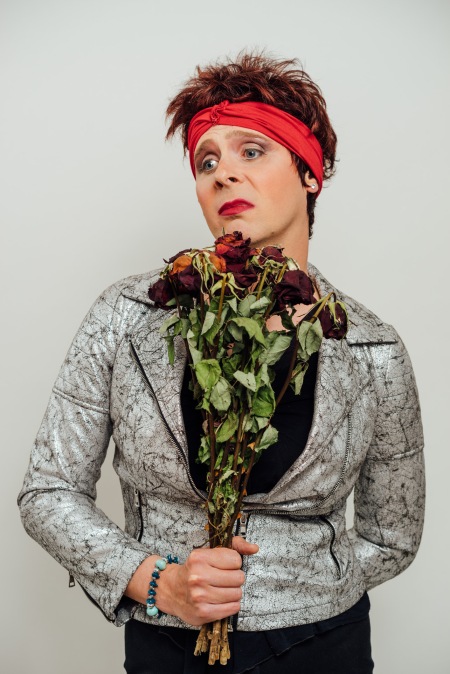
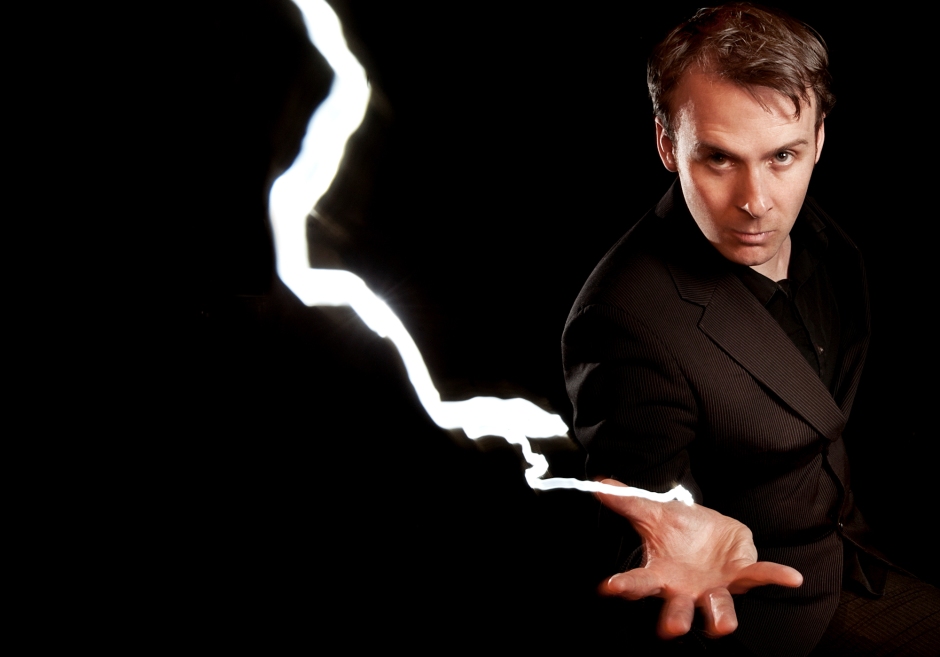
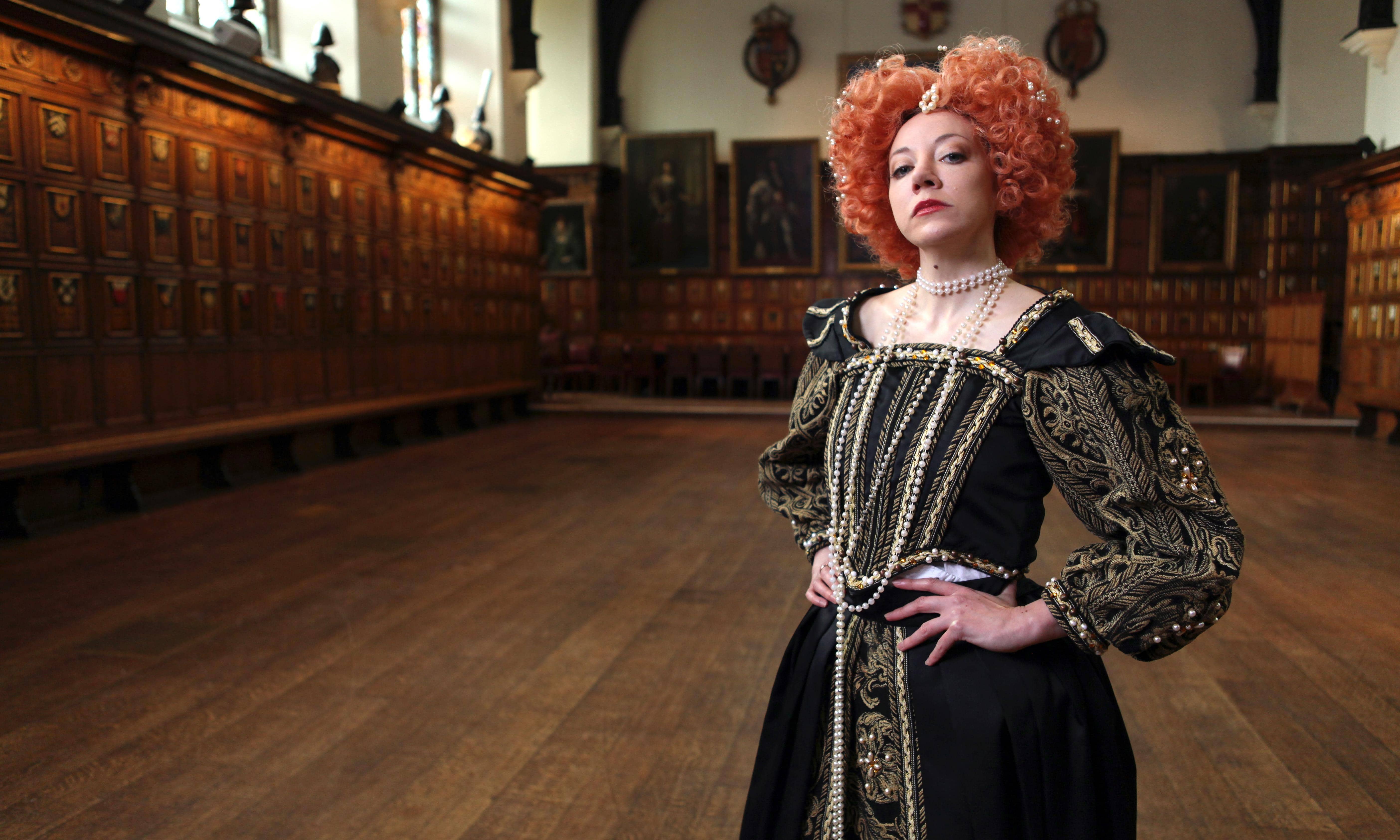
It can’t have escaped your attention that the Edinburgh Fringe is just around the corner. And with it, comes Colin Hoult‘s new hour of comedy, A Sketch Show for Depressives.
We tried to speak to Colin about his return to the festival, but when we rang his number,Anna Mann,who is sharing the bill with Colin, picked up instead.
Oh, darling, I am brimming with anticipation, greedy with it. Literally spewing excitement out of my ears. Because of the show darling. But also arguably because I just ate three bowls of Ricicles. Fuck!
Well quite. Look, I realise I haven’t seen you for about four years now…
Well I don’t think you can entirely blame me for that darling, you had my address. 69 Star Lane! Actually I have been on various peoples couches for a while, so fair enough.
You’re back in Edinburgh after a bit of a gap. Are you ready for the challenge?
Sleeves rolled up, pants on the right way, lipstick unfurled, jokes un-not thought of. Plus I’ve been swimming every day in the local pond. It’s rich with life and really setting up my poison immunity levels.
In a handy soundbite, what can you tell me about the new show?
Of course. As always it will be visceral, real and incredibly brave. It’s a silly hour dealing with my battles with the hulking monster depression, which will hopefully offer some comfort to those similarly afflicted. But riddled with funnies.
And going deeper than that, this show captures some real, genuine and rather raw emotions on stage. How much of what we see is pure Anna Mann heart and soul?
All of it darling. I don’t know if I could be anyone else. Actually, I am an actress, so forget I said that. I’m very good at playing other people. Once I played Othello and Iago at the same time. It was awful. Someone died! But you’ve got to try these things…
Your CV is littered with shows that tackled issues. Does this show follow on that legacy?
Well, yes of course I’ve covered everything from biting satire in the now legendary Shut Up Thatcher to my scathing attack on 80s South Africa in Shut Up Apartheid. This is a little more personal and closer to home, but no more than say, A Bowl for My Bottom AKA Shut Up Diarrhoea.
Now, Anna. I know you’ve been through a lot in the past couple of years. Could this show be part of a real return to form for Anna Mann?
I hope so, darling. I’ve ran out of husbands and repeat fees have all dried up. I don’t want to get beyond myself, but I’ve already learnt the show in three different languages in prep for the world tour, so fingers crossed. Sadly I’m still behind with my lines in English.
For previous runs in Edinburgh, you’ve been ably supporting your friend Colin Hoult, but this time around he’s letting you take the driver’s seat. How clean is your acting licence?
What? I need an actor’s licence? Shit! Now you tell me. This is like when I got in all that bother for driving without a driving license. I’d been doing it since the 70s.
Nevermind… er… of course, you’re not alone this time round, either. The show features a couple of promising co-stars. What can you tell me about them?
Oh a couple of darling young chaps from the local acting school. Bruce Wayne – lovely, very keen, not too bright but hell, what a specimen. Who needs to be able to read when you’ve got muscles, as I told Sean Bean all them years ago. The other one’s a bit older with a beard but he’ll do.
I’m sure the place will be packed out each night. After all, Carnival of Monsters, in which you co-starred, was a cult hit on Radio 4 recently. Has that led to new opportunities for work?
I got offered to look after my sister in law’s bric a brac stall at a fete last summer. But apart from that, much the same as always.
Oh, shame. Now you’ve moved to Brighton, and escaped that insular world of theatre luvvies and hangers on. Has it given you a new sense of perspective?
Oh yes. I’m learning how to do diablo and tight rope on the park. Plus I’m already in 42 bands! I can’t play a thing!
I’ve heard you say that you’re a bit of a black name in theatres across the land, but I’ve seen the mere mention of you cause eyes to glaze over on the right person. Particularly fans of your little seen, languishing in VHS purgatory classics like A Bowl For My Bottom and niche-cult sci-fi Professor Whatnot. Wouldn’t it be nice to see them remastered on blu-ray?
Gosh, I’m sure it would if I had any idea what you were talking about. Blu-ray, is that like compact discs?
That’s probably one for another time. I’ll bring you one to look at in Edinburgh. But while most of your work is unreleased by uncaring studios, you yourself have been engaging with new technology with your video diaries. Are you still embracing the 21st century?
I’m embracing the 22nd my truth. Always one foot ahead of the curve. You’ve got to be otherwise you’d be dead. Don’t forget every curve has an edge. Sort of.
A little birdie told me one of your many ideas on the go is to make a film about your life. Is this true?
Yes. I’ll be playing me. But oddly I’ll be playing it as Jane Fonda. A brave choice though, I hope!
For now though, Edinburgh. You don’t need to convince me – I’ll be there clapping and applauding and putting my hands together in a noise making capacity. But for anyone uncertain with a packed out schedule, why should they come and see your show above all others at 7pm at the Pleasance?
Because its honestly fucking brilliant. It’s true, it’s touching, it’s moving, it’s daft and funny and the absolute bees knees. Plus it features, I believe, the first ever onstage 69er. And if that don’t get you coming, I don’t know what will.
Fab. That’s all from me, but I’ll see you in Edinburgh. What’s your tipple?
A pint of kindness with a chaser of world peace. And some gin. Thanks Love xxx
And with that, she was gone…
Colin Hoult / Anna Mann: A Sketch Show for Depressives is at Pleasance Courtyard at 19:00 from August 3rd-16th and August 18th-28th. Tickets are available over yonder.
With the Edinburgh Fringe drawing ever closer, TVO has been speaking to some of the familiar faces you can see at this year’s festival.
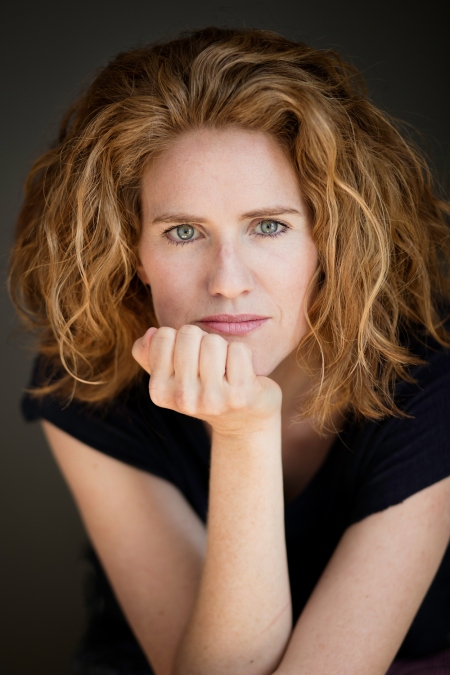
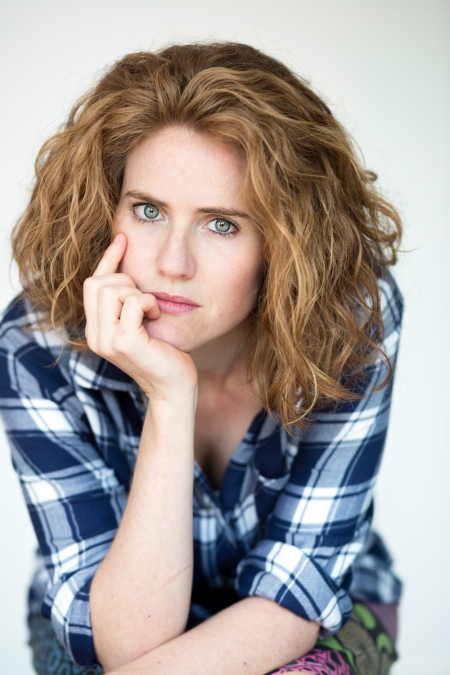
Fresh from a round of intensive previews, we caught up with the 2015 Edinburgh Comedy Award nominated Sarah Kendall for an in-depth natter about her incredible new show, Shaken, which is at Assembly George Studios from August 3rd-28th.
Comedy can be a fickle business. One minute, the critics love you, audiences flock to see your shows, and the next, you can be a has-been before you ever felt like a ‘be’. Yet after taking time out to start a family, things have kept on getting better for Sarah Kendall.
Her 2014 show Touchdown prompted rave reviews and sell-out runs in Edinburgh, London and her native Australia. The follow up, A Day in October, was nominated for the Edinburgh Comedy Award in 2015, over a decade after Kendall’s first nomination, and has since led to a commission for BBC Radio 4. Now she’s back with a brand new hour, once more telling an over-exaggerated tale from her misfit youth, and even in early, early, preview stages, the show was shaping up to be another classic.
“This is the third part of a trilogy of stories about growing up as a teenager in Australia,” she tells TVO as we grab a few minutes over the phone in the middle of Sarah’s final stretch of previews. “But it’s totally self-contained. You don’t have to have seen the others to get it. Though if you have seen them, there are little extra treats for you.” She pauses, then adds: “This one really plays with how much I blur fact and fiction.”
She’s not kidding. To say a lot about the latest tale from this masterful stand-up turned powerhouse raconteur would potentially ruin the fun, not least because the show – in typical Kendall style – will have changed dramatically by the time the show hits the Fringe. But what we can say is this: the focus is on a morning like any other, until young Sarah – a chubby, awkward teen in small-town Australia – missed the school bus, and decided she could take a short-cut and run to catch it.
“You’re kind of out there in the world, having to do stuff, but you’re not playing with a full deck.”
What happens next is a delicious romp through a series of unfortunate events that really chime with anyone who ever felt like they didn’t really fit in: either as a teen or an adult. Sarah’s efforts to catch and then beat the bus to school have disastrous consequences, until she discovers that she’s capable of doing something she never expected, all in an attempt to feel accepted, wanted and maybe even loved.
“There are so many awful acts that are very understandable when they’re done by a teenager,” she explains. “I think it’s such a confusing time of life. You’re kind of out there in the world, having to do stuff, but you’re not playing with a full deck. There are so many appalling things that I said and did. Those teenage years are when everyone does that. It’s totally fitting for that time of life.”
It’s also given Sarah a final part in a trilogy of shows which she is currently adapting for BBC Radio 4. “We got a radio show commissioned,” Kendall exclaims, joyfully. “We had two parts, and it felt like I wasn’t done with it. I thought I could get another story out of this general area, and tie up a lot of the loose ends. It felt like a really natural three-parter. It’s like: I’d built all the sets, I had all the characters in place, so I thought: ‘Might as well’, yer know?”
Not that it was necessarily easy to write, spurred on by the pressure of following up genuine success with last year’s show. “When I started,” Sarah reveals, “I wrote a show that was so over-complicated. I didn’t realise what it was. I’d just created this beast, and I thought: ‘Why is this? What have I done wrong with this show?’ I think I felt that pressure, and then I thought: go back to basics, ignore the pressure, and put in the ground work.”
“There’s a process that never seems to get faster,” Sarah continues. “I tend to make all the same mistakes every single time. But I kind of enjoy that Rubix Cube element to it. This story stuff is like a never ending head-fuck that I love. I had a breakthrough for writing this show, and I rang my producer, cos we’d been agonising over the end for ages. And I told him my ending, and he said: ‘How did we not figure this out earlier? How did we not see that a month ago?’ I think if you’re trying to do something a bit different, you have to take it in the neck when it goes a bit pear shaped. Some of my previews were so bad, and I had to accept it just wasn’t working.”
TVO can’t help but point out that the preview we saw Kendall perform in Manchester a few weeks ago may have been rough around the edges, but it was in strong shape, filled with laughs, and felt like a great show was forming.
“The more you complicate it, the more you get diminishing returns…”
“That’s really sweet of you,” she says, perhaps slightly taken aback that someone could have possibly enjoyed her self-described ‘blacmange of about fifteen different ideas’. “I think maybe you saw its second outing? I’ve really played down the sci-fi element since then,” she half-jokes. “I think I was trying to live out some of my Kurt Vonnegut fantasies, but it really clouded the story quite a bit. I’ll have to live those out at a later date.”
“I really kind of stripped it back,” she continues, “and thought about the strength of the last two shows was that they were just really good stories. I think often it’s erring on the side of simplicity. It’s almost like the more you complicate it, the more you get diminishing returns. If you stick to a strong and powerful story, don’t try to get fancy, don’t try to blow their minds with a big fancy ending… it works. Once I got rid of that panic, it was just the basics of the work. I think the show works really well now, and I’m really happy with it.”
It can be hard to preview any form of comedy show, but the feeling is particularly intensified when you’re not doing plain stand-up or a variety of quickfire sketches. When all you’ve got to offer is one big, in-depth concept that audiences can swallow or spit back at you, it’s got to be one that really works. Sarah is quick to agree.
“What’s great about previews,” she explains, “is that I tend to write a 25 page show in isolation, and then I have to stand up on stage without having tested any of it, and tell a 25 page story. Invariably the first five or six shows are just fucking appalling. You just have to put a big red line through about 70% of it. About 70% is just wrong. It just doesn’t work. But when you’re at your computer, you can’t figure that out on your own. You have to write down everything, so you can see how far you’ve gone wrong. You really have to stand up and say it in front of human beings to realise how far you’ve disappeared up your own arse.”
“That loss of cabin pressure is always a shock to the system.”
TVO wonders if this process has gotten easier as Kendall has grown in experience. “Oh, no,” she laughs. “I always hurts. It’s a horrible feeling standing in front of a room full of people, and realising you’ve lost them. And you know why. Even as you’re standing there doing it, even as you’re saying it, and doing it, you’re thinking: ‘Aw, shit. I know what’s gone wrong, here.’ But it’s too late. You’ve gotta fucking do it. I don’t dread anything as much as I dread the first half a dozen previews.”
“But I’ll tell you what it is,” she adds. “By the time you’ve finished your previous show, you’ve done it 40 or 50 times, and you think: ‘Fuck, this show’s good.’ And every time you’ve gone on stage you’ve tightened it up, you’ve gotten rid of all the bad bits, and the show’s as good as it can be. And then you get the illusion you’re a really good performer, so when you do the very first performance of the new show, all you remember is the 40 performance of the last one. And you go: ‘This is shit! This is fucking… this show sucks!’”
TVO can’t help but laugh, knowingly. “You compare it to something you’ve done 40 or 50 times,” Sarah continues, “and you’ve got it into really good shape. Now you’re back to the first performance. That loss of cabin pressure is always a shock to the system.”
Of course, that last show was the hugely acclaimed A Day in October, which saw Kendall receive a much deserved Edinburgh Comedy nomination, sadly losing out to the admittedly brilliant Sam Simmons. The last time she was nominated it was 2004, for a very different kind of show, and given her time out of the limelight, TVO can’t help but note it’s a glorious comeback, though Sarah is typically more realistic about the whole experience.
“It was just lovely,” she says. “No matter what my thoughts and feelings are about awards, and that sort of scene, it’s undeniably pleasant at the end of such a long slog of a festival, to get that sort of attention. It feels great, and it’s incredibly flattering, and it’s a really lovely experience. For me to have gone away and had kids, and then come back and struggle to find my place again… not only had I come back after having been away for a while, but my style had totally changed. For that to be recognised was incredibly special for me.”
“To show up with a show like that, to me, felt very risky… …and for that to be recognised felt like a really big gamble that paid off.”
Surely it felt like some sort of validation that what she was doing is what people wanted to see, particularly when the majority of previous nominees are in the early days of their careers? Sarah agrees, and thinks for a moment.
“I’ve been to Edinburgh enough times to have practically every experience of the festival,” she states. “I’ve done shows that are duds that no-one’s turned up to see. I’ve had shows that were really good that no-one’s turned up to see. I’ve done really good shows that have been very well attended…” She trails off.
“I feel like I’ve done the entire gamut of the Edinburgh Festival. At this stage of my career to show up with a show like that, to me, felt very risky, given the nature of Edinburgh’s offerings, and for that to be recognised felt like a really big gamble that paid off.”
Indeed it did. Advance tickets for her Edinburgh run are selling well, the buzz is building, and the forthcoming Radio 4 series is just the beginning of a new phase in Kendall’s career. And somehow, she’s managing to keep her head screwed on.
“There’s a couple of things that are on the table at the moment,” she hints, “that are looking really positive. I’d never count my chickens, cos these things can go fairly pair-shaped quickly in my experience. But if those go ahead, I’ll be looking at much bigger narratives. And if that doesn’t happen, I have another story in mind for a stand-up show, that’s set in the 1960s.”
“Thing is,” she adds, “if it comes as a consequence of these shows, that’d be terrific and I’d be really happy about it. But if it didn’t come, I wouldn’t mind either, because I love doing these shows. In a way, I feel like I’ve really sorted my head out. I get it. I don’t think I’m really seen so much as a stand-up now. I got to the point with stand-up where I was kind of sleepwalking. And I’ve done the party phase of my life. I miss it terribly, but I’m an older performer now. I’m a bloody parent. You’re never gonna see me in the bar at 11:30, going: ‘I should have been in my taxi ages ago!’”
So while Sarah may be spending most of her time in Edinburgh cramming in kids shows and, in her own words, letting her son ‘fuck around in a park’, she’s finally worked out where she belongs, and the success of her previous shows has only made her more determined to reach the top of her game, her way.
“All you should really be doing,” she sums up, “is what you enjoy doing night in, night out. It took me a long time to figure that out, but I feel like I’ve found my scene. All I really have the emotional energy to do is try and make the best show that I can make. The only thing I can control is how good I can make it.”
We can’t wait to find out how good that is, but if we were taking bets, the smart money’s on a corker.
Sarah Kendall: Shakenis at Assembly George Square Studios, Edinburgh from August 3rd-28th.
Bank Holiday Monday sees Russell T Davies new adaptation of A Midsummer Night’s Dream première on BBC One, with TVO regular Matt Lucas in the star-studded cast. But as the flagship drama on the nation’s biggest tv channel that night, TVO was curious: is it accessible to relative Shakespeare newbies? We took a sneaky peek to find out…
There’s little point in TVO trying to pass comment on the core text behind A Midsummer Night’s Dream. For hundreds of years, countless scholars have broken down every line of The Bard’s fantastical tale. Children in schools up and down the land have battled through their GCSE homework trying not to laugh every time they write the word Bottom in an English essay. And while early criticism of the play considered it both insipid and ridiculous, it has since become a veritable mainstay of the stage, screen and beyond.
Indeed, such is the draw of the piece that, like many of Shakespeare’s works, it has also inspired overtures, operas, ballet and visual art. Even The Beatles performed an excerpt from it in 1964, with Ringo as a lion and John Lennon wearing pigtails (YouTube it). Perhaps it is the fusion of fantastical elements – fairies, love-potions and transformations – with a four-way romance and an early example of a play within a play, that makes it so beloved.
Yet to many Shakespeare, for want of a better way to describe it, is often damn near impenetrable. The language may be poetic, and mesmerises those who understand it centuries after it was written, but the archaic structure can often prove too much for some, no matter how many ‘fresh’ twists are put on the staging. And in this adaptation, the fantastical realm is fused with a modern-world spin. As Philomena Cunk recently put it: this is one of those ones “where they speak in Shakespearean gobbledegook whilst dressed in contemporary clothing. A bit like Russell Brand.”
The latest person to spearhead an attempt at fusing the words of the 16th century with the world we live in today is Russell T Davies: the inspirational genius behind classic dramas Queer as Folk, The Second Coming and Cucumber. And to help bring his longstanding dream of adapting the play to the screen are some old friends from his days as showrunner on Doctor Who – a series he brought back to life so successfully in 2005, before handing the reins over to Steven Moffatt in 2010.
Technically, there’s an argument that A Midsummer Night’s Dream is really an episode of Doctor Who. We’re not remotely suggested a shared universe here: merely shared production duties, as the special was produced as part of Who’s ninth series. Most of the crew – including executive producers Brian Minchin and Faith Penhale, and producer Nikki Wilson – are veterans of the Time Lord’s adventures, and anyone who saw Kill the Raven or last year’s Christmas special The Husbands of River Song will undoubtedly recognise the standing town set from both episodes getting one last bit of recycling here. Murray Gold, who has scored Doctor Who since it returned in 2005, is also on hand, as are regular FX gurus Millennium FX and Real SFX.
The results are undoubtedly a glossy affair, directed with real visual flair by David Kerr who recently brought Inside No. 9‘s first series to the screen. Barring a few minor moments, the effects sparkle with real pizzazz, including near flawless costume and prosthetics. Gold’s score complements the action beautifully, searing and soaring with all of his usual gusto. And Russell ‘The T’ Davies has not only adapted the text carefully, but together with his casting team, pulled no punches in assembling a top notch talent pool on screen too.
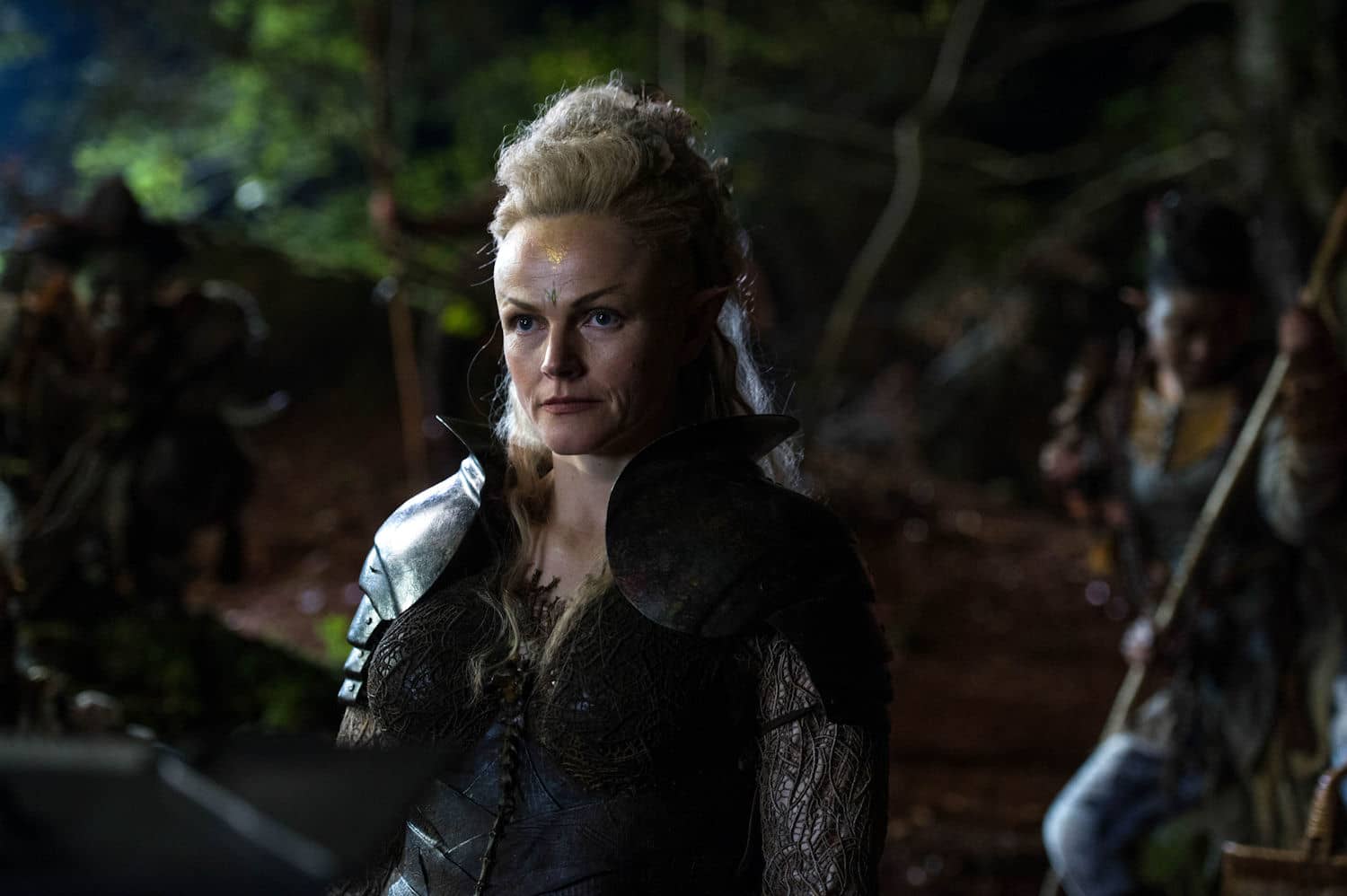
Blasting her way across the screen front and centre is Maxine Peake – fresh from rave reviews for her recent role in The Skriker at Manchester’s Royal Exchange Theatre – as Titania, the Queen of the Fairies. Her husband, Oberon, is portrayed by former Game of Thrones star Nonso Anozie, and between them, they shoot cgi thunderbolts, appear and disappear in swirls of dust and oversee all the chaos that their bickering unleashes upon the hapless mortals who happen to be in the woods that night.
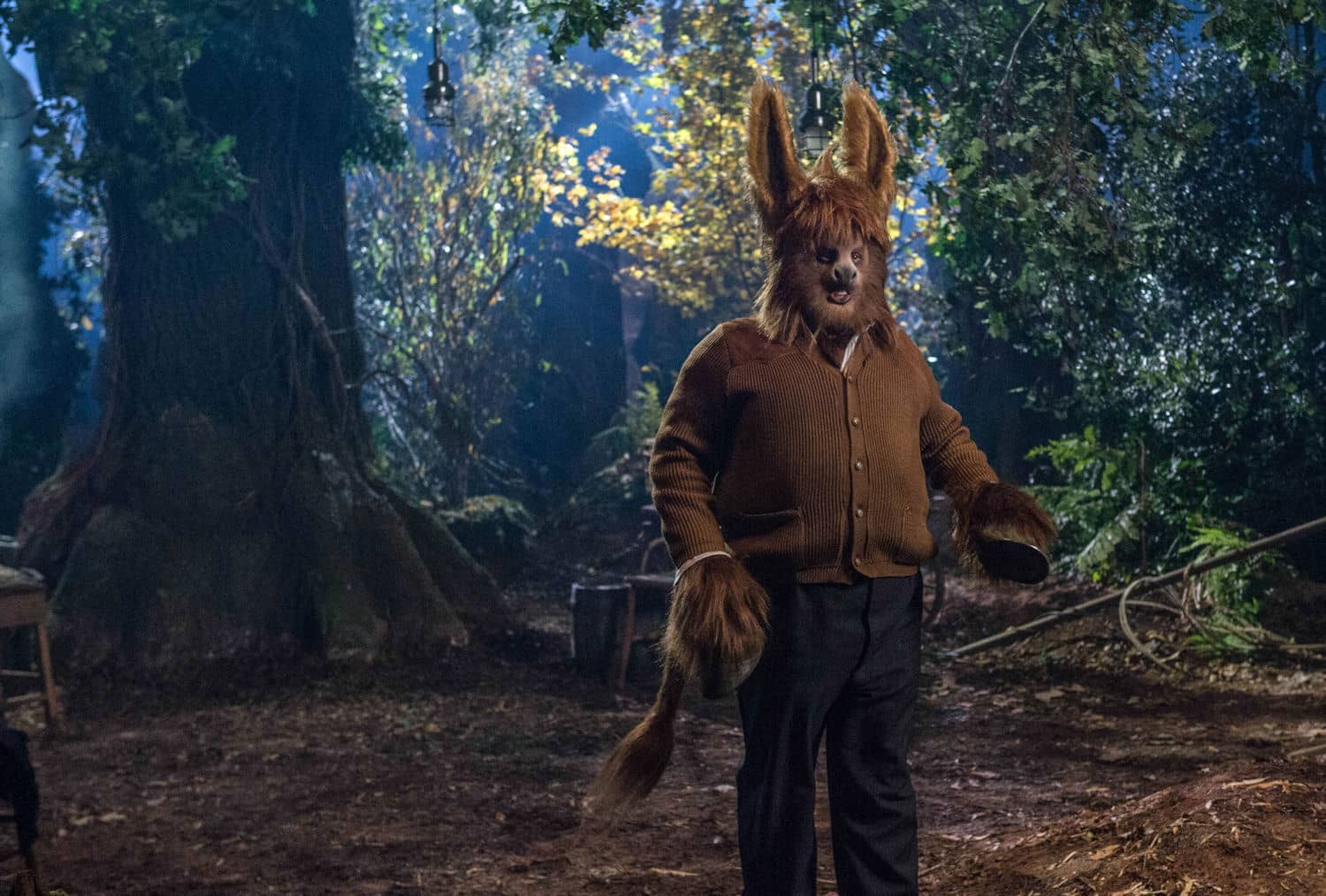
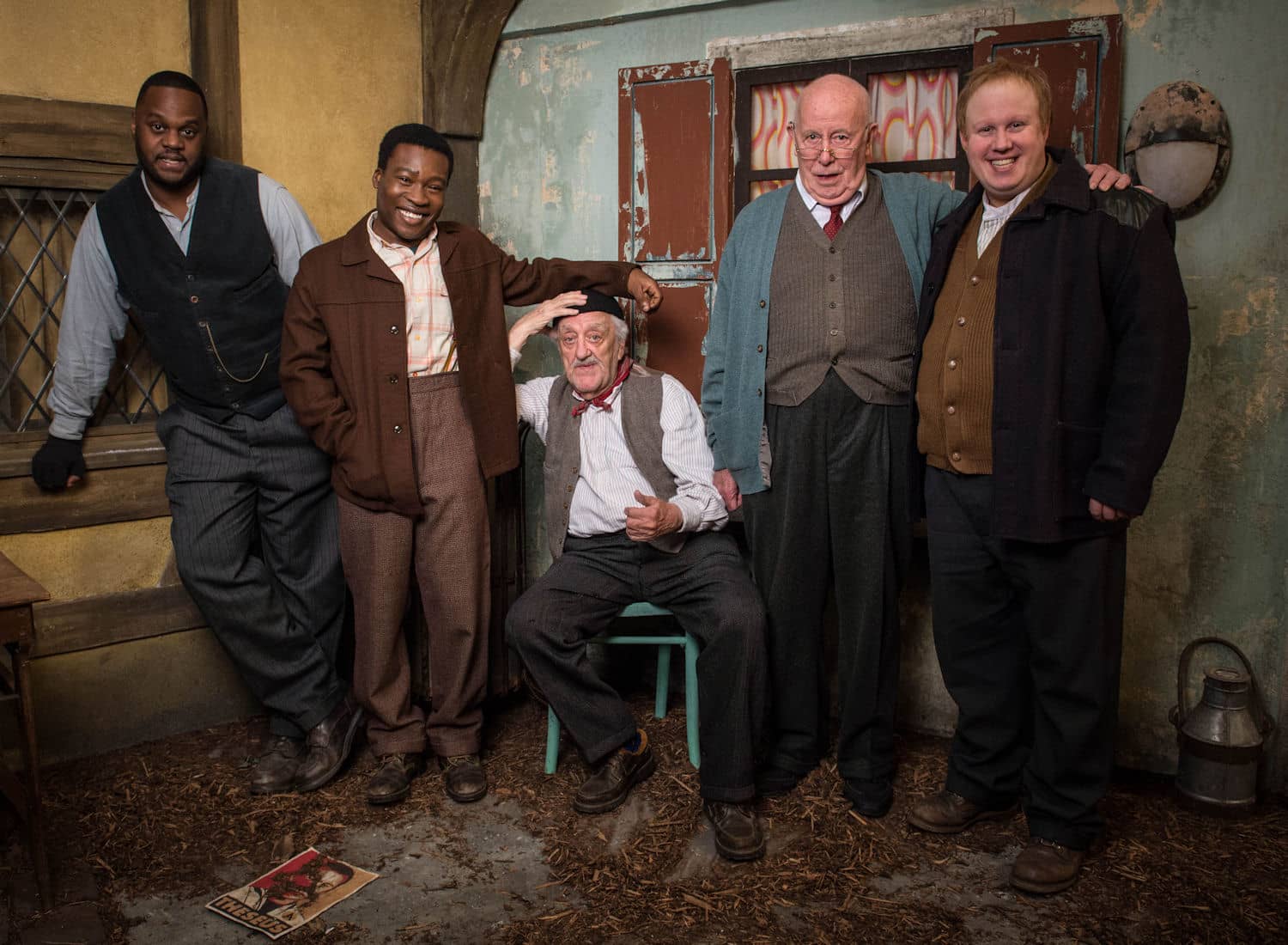
These human types include a gaggle of would-be thespians, led by the mighty Elaine Paige, no less, and also featuring Richard Wilson, Fisayo Akinade, Bernard Cribbins and the highly underrated Javone Prince (Angelo’s, Horrible Histories, AmStarDam). But most prominent of all of them, of course, is Nick Bottom – a weaver with aspirations of stardom, and an overeager desire to play as many parts as possible. Who then spends most of the play transformed into an ass.
As Bottom, Matt Lucas gets to play a charming comic foil. Arrogant yet too silly to be offended by, stupid yet astute enough to not dismiss, he gets to lay back and be fawned over by a potion-struck Titania after himself being transformed into a donkey-man hybrid purely for the amusement of the fairies. It could be a thankless role, and while it doesn’t exactly challenge Lucas to deliver anything new, he brings real charm to the part, and it’s hard to imagine a more fitting person in the role.
So too, do the relative newcomers who form the love-rectangle of Hermia, Lysander, Helena and Demetrius. Kate Kennedy (recently seen briefly in Catastrophe), particularly shines as the unlucky in love Helena, who loves Demetrius (Paapa Essiedu) dearly, but can’t understand that he’s fallen for Hermia (Prisca Bakare), who in turn loves Lysander (Matthew Tennyson). Philomena Cunk might have recently suggested they didn’t have jokes in Shakespeare’s times, but this quartet manage to handle comedic material brilliantly, and further great work will surely follow for them all.
However, there are a few problems with the adaptation that, unless you’re familiar with the play, make it hard to follow. Firstly, RTD has taken the bold choice to stage The Duke’s palace as the centre of a tyrannical empire: with armed guards and a straight-jacketed wife to be. As The Duke, the delightful John Hannah (Marley’s Ghosts, A Touch of Cloth, Paul Calf’s Video Diaries) flexes his dramatic muscles, and the screen bristles with electric energy whenever he’s nearby.
Yet for all his noble efforts, the reason for the shift towards an out-and-out villainous Duke with a big comeuppance goes unexplained, and feels almost shoehorned in to cover up the fact that the apparent villains – Oberon and Titania – are actually up to no more than a little mischief against one another. In fact, unless you’re aware of the play previously, you’d be hard pushed to realise that the two fairies are King and Queen, and not simply at war with one another at first!
In fairness, the narrative structure of the original play is perhaps a little to blame for some of the confusion. And it does feel a little bit of a shame to get actors of the calibre of Richard Wilson, Bernard Cribbins and Elaine Page on board, only for them to do so very little – though Cribbins impersonation of a wall and the sing-a-long during the finale will have even the coldest hearts smiling. The man is quite simply a national treasure, and even a sprinkling of him will suffice.
Certainly, if you’re not able to grasp the nuances of Shakespeare’s text, you’re unlikely to have an epiphany watching this adaptation. It’s pretty as can be, and everyone involved has given it their all, but unless you’re attuned to the language, it can be incredibly distracting and make key plot points slip under the radar. You’ll get the gist, and the core of the story is pretty simplistic once you know what’s happening, but it’s much more fun when it actually starts to make sense, and for that, it’s probably best to be in tune from the get-go and let yourself adapt to the language as quickly as possible. It’s not as hard as it looks, once it clicks.
Because as vaguely contemporary yet fantastical adaptations go, this one has everything you need – right down to some nifty little in-jokes (check out the theme tune for A Comedy of Errors during the early pub scene). As a bold statement of just what the BBC can do with the right people pouring heart and soul into a project, there are few finer. Heck, even as a flagpole for diversity, there’s a lot to take stock of here. It might not change minds on Shakespeare’s work, but it may just open a few of them to it instead, and in the end, that’s the real dream…
As part of their celebrations for the 400th anniversary of William Shakespeare’s death, BBC Two have commissioned Philomena Cunk to look back at the Bard’s life and works. Set to air on Wednesday 10th May, TVO couldn’t resist taking a sneaky peek…
400 years ago this year, William Shakespeare stopped happening. In comparison, it’s been less than four years since Philomena Cunk started happening, but she’s the one we’re writing a preview about, so you can draw your own conclusions about which one is better.
For the uninitiated, Cunk is portrayed by Bolton’s real greatest comic Diane Morgan.First appearing as a talking head on Charlie Brooker’s 2012 Wipe, whenever Brooker has returned to his televisual sofa to poke a satirical finger at the news, Philomena Cunk has been close by: either commenting on weird happenings alongside Barry Shitpeas, or more recently in her own segment: Moments of Wonder.
The runaway success of the latter forms the basis of Philomena’s first proper telly – particularly as regular Wipe director Lorry Powles, and Cunk’s powerhouse trilogy of writers are all on board: Charlie Brooker, Jason Hazeley and Joel Morris (the latter duo have also written for the likes of It’s Kevin, Murder in Successville and Yonderland), whilst Zimbani producer Sam Ward is on hand for good measure. Throughout the show, Cunk studies Shakespeare’s life, discovering more about the Gary Barlow of his day, by talking to experts on his life and works.
It’s fair to say a lot of people have been clamouring for the character to get her own show for years now, and the Moments of Wonder segments have frequently become the real highlight of Wipe. But they’re always no more than a few minutes long. The preposterous statements and confuzzling of guest speakers is short, sweet, and goes away before it risks growing tiresome. The big worry with extending Cunk’s screentime is simple: does the joke work over longer periods of time?
The good news, then, is that it does. In spades. Which are better than shovels, because they sound posher. By tackling a subject as colossal as William Shakespeare – the greatest playwright who ever lived – Morgan and the writers have a veritable goldmine of raw materials from which to concoct their own deliciously layered text, and Diane delivers it with her usual impeccable straight face and deadpan delivery. The out-takes reel must be almost as long as the show itself, because there’s no way anyone could stifle their laughs as well as Morgan and her guest contributors manage.
The writing here is also genuinely delicious. TVO is reticent to spoil anything, but the hit rate is so high, it’s safe to tease a few pointers and know you’ll still be guffawing at everything else in-between. So, from the moment Cunk wonders why we don’t talk about Les Dennis any more – “Even though he’s still alive, and hasn’t done anything wrong.” – to the moment she bids her new-found hero a fond farewell with a quote from a 90s pop classic, the legendary Cunk-wit is on fire.
For example, while taking audiences on a chronological journey through ol’ Bill’s life, Cunk notes of his education that, back then “school was easier, because you didn’t have to study Shakespeare”. Before explaining the difference between the theatre, television and cinema, and just why people in plays shout so much, she explains: “It’s hard to believe it now, but back then, people really did got to the theatre on purpose”.
And then there’s the descriptions of some of his most famous works: be it comparing Macbeth to Pacman, dubbing The Tempest ‘Shakespeare Squared’ or suggesting Romeo & Juliet is “easily the finest romance of the pre-Dirty Dancing era”, which may change the way you think about Shakespeare’s works for good.
Along the way, acclaimed theatre director Iqbal Khan gets a grilling on The Globe’s standing policy, while Professor Stanley Wells CBE (the Honorary President of the Shakespeare Birthplace Trust) gets to shock Philomena with revelations about Shakespeare’s romcom. The Head of Collections at SBT gets a telling off over a pair of gloves and his use of the word folio, whilst fending off incredible questions about getting sound into ink that only Cunk could ever ask. And Ben Crystal (co-author of the Oxford Illustrated Shakespeare Dictionary), Matthew Burton from Educating Yorkshire and the actor Simon Russell Beale are questioned over the use of language in the Bard’s works, with the latter having to face the impossible task of quoting from the text while Philomena grows increasingly bored beside him.
In spite of – or perhaps because of – Philomena’s befuddling questions, the results are surprisingly revealing. The beauty of Cunk on Shakespeare is that, for all of Philomena’s off-kilter observations, the show does manage to tell the story of William Shakespeare in an accessible way. Of course, it skims around on the surface, and doesn’t reveal anything new, but Cunk’s exploration doesn’t just make things up for the hell of it: it remains factually correct throughout, even down to her assessment of Shakespeare’s final masterpiece.
And as a taster of extended Cunk action, it shows there’s a lot of life in the character yet, and the sooner someone gives Diane Morgan a full series of her own, the better. She might move to Finland before it happens, or fall prey to a magic murder, but if they’re quick, they can get a few episodes in before Hamlet makes up his mind, which takes ages, so there’s time to sort it out. Get on it, BBC Two!
Cunk on Shakespeare airs Wednesday 10th May at 10pm on BBC Two. You can see a preview clip below.
In early 2016, I co-produced this short film for Arts Council England, concerning several projects in the North of England which provided a creative lifeline to elderly members of the local community. This was part of the wider #CultureMatters campaign.
A video I co-produced whilst working at Arts Council England. This was part of a wider campaign which I also worked on regarding the Creative Case.
A version of this was also produced with British Sign Language which can be viewed below.
You can read the full Diversity and the Creative Case report I worked on, as well as more recent updates on the topic, over at Arts Council England’s website.
A deliberately lo-fi music video for the band Goldblade, shot during their 2015 Punk Rock Tram Ride in Blackpool. A one-chance event to shoot handheld footage, later matched up to the Acoustic version of their song Jukebox Generation. Lots of fun to attend, and a joy to frantically patch together an edit in under 24 hours.
Monday, 13th July sees the launch of the latest batch of BBC Comedy Feeds – taster pilots for potential new shows launched exclusively on BBC iPlayer.
Naturally, there’s a whole host of TVO talent involved on both sides of the camera, with the likes of Michael Smiley, Ellie White, Alice’s Wunderland producer Sam Bryant and House of Fools producer Lisa Clark involved in various productions across the set.
The biggest TVO conglomerate however, is in Dead Air – Tiger Aspect’s sitcom featuring Radio One DJ Greg James alongside TVO regulars Tom Davis and Nico Tatarowicz, and music by Waen Shepherd.
Intrigued by the project, TVO readily agreed to talk to one of the biggest names in broadcasting about his move into comedy. Here are the results.
Mick Jagger’s accent in Ned Kelly. David Bowie’s package in Labyrinth and Lily Allen’s ill-fated chat show – showbiz history is littered with moments a star tried to do something different, and faced derision evermore. Doing something different, when audiences know you as one thing, can be tricky, and only a select few make it out the other side in one piece. If there’s any justice in the world, Greg James will be one of them.
Best known for his work on Radio One since 2007 – he’s presented the Drive Time show since 2012, and recently took over the revamped Radio One Chart Show – James has fused his radio broadcasting with work presenting a string of BBC Three shows and last year’s Invictus Games closing ceremony. To the outside world, he’s following the path of a standard BBC radio presenter. You could almost smell a stint on The One Show lurking in his future.
Yet there’s a lot more to Greg James than first meets the eye, and this year has provided him with not one, but two opportunities to begin the second stage of his career. Following a guest appearance in BBC Three’s sublime Murder in Successville alongside Tom Davis, Colin Hoult and Cariad Lloyd earlier this year, James is about to unleash his debut as a writer: the sitcom pilot Dead Air, which launches as part of this Summer’s latest batch of Comedy Feeds, and reunites him with Davis and fellow Murder in Successville alumni Nico Tatarowicz and Waen Shepherd, the latter of whom scored both productions.
“For me, it’s not a shock,” Greg tells TVO as we catch up to talk about his first steps into alternative comedy. “The shock for me would be to not try it out. I’ve always been acting. I did a drama degree. I did the National Youth Theatre, and all that stuff. But I understand it will be to a lot of other people. It’s very difficult to not be put in a box, but I’m going to try my best.”
Dead Air is certainly an impressive starting point. The 17-minute taster features James, perhaps understandably as a cool, late-night DJ called Jake Cross, working for a commercial radio-station with a loyal fan-base and real credibility. But when the brash, loud-mouthed breakfast DJ dies on air, there’s an opportunity for Jake to take over his show, and he must battle the moral dilemma that potential fame and fortune in return for doing fart jokes, prank calls and silly voices first thing in the morning offers. Does he make the move and lose his credibility, but get to hang out in exclusive nightclubs and savour the massive boost to his public image?
“Obviously, the inspiration for it,” Greg explains, “comes from everything that I’ve experienced and been part of for the last eight years on Radio One. I heard an interview with Ricky Gervais, and he said you’ve got to write about what you know. I realised about two years ago that this industry is funny. The people in it are funny, the conversations are funny. The real jumping off point was when the breakfast show gig at Radio One did come up. I’d just been given the Drive Time show, and was incredibly happy, because things had gone better than I ever thought they would do. Everyone else was going: ‘Oh my god, you should do the breakfast show!’, and that made me go: Should I? Do I want it? I thought that dilemma, and that peer pressure was an amazing basis for a show, so I elaborated on it and took it to really strange places.”
It would, perhaps, have been easy for Dead Air to be a cheap bit of filler, but Greg’s passion for the project and determination to take it seriously has led to the assembly of an impressive team making his idea come to life. The production is being made by Psychobitches producer Ben Cavey’s new company Cave Bear Productions, produced by Arnold Widdowson (Crackanory, Grandma’s House) and directed by Simon Gibney (Horrible Histories, Watson & Oliver). On co-writing duties are Mark Chappell and Shaun Pye, who previously collaborated on Daniel Radcliffe and John Hamm vehicle A Young Doctor’s Notebook and before that, cult favourite The Increasingly Poor Decisions of Todd Margaretstarring Sharon Horgan and David Cross. Even for a broadcaster as established as James, it could be very easy to be overwhelmed by the interest in his concept from the get-go.
“It was a really brilliant, collaborative effort, and I was quite sad when it ended.”
“I was quite daunted to begin with,” he reveals. “I’d known their work, and they came highly recommended. I went to see [Chappell & Pye], fully expecting them to think I was just a radio knob who didn’t know what he was doing. It was really lovely, actually. They were very supportive of the idea, and realised quite quickly that I wasn’t just doing this for a laugh, and I wanted to take it very seriously. They were very generous letting me take the reins, offering support and helping me shape it into a story. That was what I didn’t have enough experience doing and needed help with. I could write jokes, and come up with character ideas, but actually coming up with a beginning, middle and end is, I suppose, what I was struggling with.”
“I found the whole thing absolutely the most enjoyable thing I’ve ever done,” he continues, full of genuine enthusiasm. “It was a pinch yourself moment when we sat in a room at the BBC for nights on end. One of us would stay at the computer, and the others would just walk around and say ideas and lines, and all the rest of it. It was a really brilliant, collaborative effort, and I was quite sad when it ended.”
It may come as a surprise to many, but James is a self-confessed comedy nerd, even down to choosing to base the writing sessions in the ‘Basil Fawlty Room’ at the BBC, due Fawlty Towers kick-starting his fascination with comedy at an early age.
“My first ever real obsession,” he explains, “to the point where I would get my mum to go and buy me the script book was Fawlty Towers, and it made me realise how incredible a story you have to create. As a kid, I just thought: Who is that funny tall man running around? I like this, and I like how he hits that man over the head with a spoon. As I grew up and read about John Cleese, and learnt about Monty Python and Michael Palin and all that, I realised I love the way they’d write things and the characters they created.”
“I love creating stuff that wasn’t there before. That’s what really drives me to carry on.”
Indeed, it was Palin who inspired Greg to take the plunge into making Dead Air a reality. “Really, Cleese and Palin are my real heroes,” he gushes, with the sense he could talk about Python for hours on end, “particularly Michael Palin, because what I learnt a few years ago after reading and then, nerdily re-reading his diaries – which I can’t really say much on Radio One because it’s not relevant to that audience – is that you don’t have to just stay doing one thing. I think he was a real idol of mine, because I saw him as the guy who did Around the World in 80 Days, but as I got older I realised he was also in Monty Python, he was a writer, an actor, a director, he’s also a playwright… he’s everything! Reading about people like him made me go: Okay, I’ve done one thing, but I don’t just want to be the Radio One guy forever.”
“To a certain extent,” he adds, “I’ve always loved performing. Radio One is an amazingly creative place, because they let you do stuff. I know I wouldn’t have wanted to do it as long as I have if I’d been on a station where it’s all about reading the travel news then playing the hits. For want to a better phrase, I’ve always liked arsing around. It really started out of student radio, where I’d get some mates in and we’d just do stuff. It was a dream of mine to be on Radio One, but now it’s happened, I feel it’s a good time to explore some of my other passions as well. I’m an absolute nerd on everything I’m passionate about, whether its comedy, or cricket, or the radio. Those are my passions and they’re the things that keep me going. But I love creating stuff that wasn’t there before. That’s what really drives me to carry on.”
Back to Dead Air, then, and another stand-out point is the impressive cast. Alongside James and Tom Davis as his disgusting agent Perry, are an impressive team: from The Thick of It’s Olivia Poulet as his neurotic producer to Ashes to Ashes star Montserrat Lombard as the widow of the late breakfast show host. Also along for the ride are Richard David-Caine (Skins) as Jake’s idiotic best friend; Nico Tartarowicz as an over-enthusiastic fan; and stand-up veteran Jared Christmas as a rival DJ from another station. Understandably, Greg is full of praise for the team.
“I feel incredibly lucky to have been surrounded by those people,” he affirms. “It was really helpful for me, because I needed people with experience around me. I had confidence I could do it, but I couldn’t possibly have been there worrying about the other cast members as well. I had to leave the writing at the door, and go and try and be this person. I got on really well with [Tom] on Murder in Successville, so to have him there as my co-star was great. And Jared is someone I’d watched doing stand-up over the last couple of years, and always thought he’d be great as a big brash Aussie, even though he’s from New Zealand. Then to get a touch of class with people like Olivia and Montserrat. When we got a yes from them, I thought: this is getting real now. I’m very happy, because they’re a talented bunch.”
“One of my favourite characters in the whole thing,” he continues, “who we’ll definitely revisit if he wants to do it, is Nico. He completely got it. He absolutely nailed that character, and if the full series comes about he’s the first name on the call sheet for me. The most amazing thing about the day we filmed with Nico was that we did it outside the BBC, and when we finished and walked through the main exit, there was a guy who was the spitting image of Nico, actually waiting for me outside the BBC. It was art imitating life with the most ridiculous thing ever.”
It’s also safe to say, TVO asserts, that following Murder in Successville earlier this year, Dead Air continues the rise of James and Davis, one of TV’s great power-couples, to which Greg is reduced to giggles.
“We get on very well,” he states when he calms down a bit. “We met when we did the taster tape for Murder in Successville, which was just as I was starting to write Dead Air. I always had the idea for Perry [Jake’s agent] to be an absolute shitbag. He’d be really nasty and gross, but the audience would love him and want to see more of him.” He stops and laughs again. “I think Tom is one of those people in real life. He looks very frightening. He’s very imposing, and quite scary when you first meet him, but then you realise he’s actually very soft, and very warm. And he’s a brilliant performer, which goes without saying. I had him in mind as we were writing. I really wanted him to say those lines. And genuinely, one of my favourite things I’ve ever done was doing Murder in Successville with him.”
“I was just sort of fascinated she was sat in a warehouse in Middlesex… …touching me up and talking about my cock like it was a Toblerone.”
For the uninitiated, Murder in Successville saw Tom Davis play a gruff, useless detective partnered with a different celebrity ‘rookie’ each week, as the two investigated a murder in the fictional titular town. The culprit was inevitably one of the various showbiz inhabitants they’d meet along the way, played by a variety of comedy legends – with Tony Way, Harry Peacock, Tom Meeten, Gemma Whelan and many more popping up throughout the run. In Greg’s episode, he would meet three potential suspects: local priest Gary Barlow (Colin Hoult), casino owner Justin Bieber (Cariad Lloyd) and strip-club baroness Mary Berry (Frances Barber): and the result is an experience Greg will never forget.
“It was the most enjoyable thing I’ve done in front of a camera really, until Dead Air¸because that’s my baby. I had no script, so I felt very liberated. I’d done [improv] at university, putting on sketches and shows and all that, so it was just amazing to go in and be the bumbling sidekick. They genuinely don’t let you know anything about it.”
It must be weird, TVO opines, to see familiar faces like Frances Barber never dropping character with you.
“That was the weirdest one,” Greg agrees. “All I knew was I was at the door of Mary Berry’s strip club. I walked in, and looked at this lady, and in my head I’m going: ‘I quite recognise… on my god, it’s Frances Barber.’ So for the first take, I was just sort of fascinated that Frances Barber was sat in a warehouse in Middlesex, dressed as Mary Berry and smoking, touching me up, talking about my cock like it was a Toblerone. I had to get over that quite quickly.”
“It was quite a brave thing for the BBC to commission,” he continues, “because it’s not an instant get. You have to invest in it. I imagine for every person who gets it and loves it, there’s a person who goes: What the hell is this? I think you have to really invest in it, and then you get a lot out of it.”
Such is the case with Dead Air. There will be those who dismiss it as the whims of a celebrity DJ, just as there will always be people who can’t see past Bowie’s tights in Labyrinth to find the delightful adventure all around them. As an iPlayer Comedy Feeds pilot, those who watch will have to make the effort to do so – there’s no accidentally stumbling upon it, unknowing, and realising its hilarious. People will have to leave their prejudices at the door when they hit ‘play’.
TVO urges you to do so. With the help of an impressive team of creative talents, Greg James has made a confident and assured debut, and hopefully we’ll be seeing more of Jake, Perry and the rest of the team again very soon. He’s got lots of ideas for the show, and says the book of them is being added to every time he walks into his day job. Perhaps the final word should rest with Greg, and the way he explained his pet project to the cast when he approached them: “This is not a whim. I’m very serious about it. We’d love you to come in and give it a go.”
Dead Air is available to view on iPlayer from Monday 13th July.
This week sees the launch of Hoff the Record – the brand new partially improvised mockumentary about David Hasselhoff, in which the 80s legend stars alongside TVO regular Fergus Craig.
With numerous other familiar faces appearing across the run, and this being Fergus’ most high profile role in quite some time, we were keen to sit down with the man himself to learn a bit more about working with The Hoff, and his past, present and imminent future.
“He doesn’t look like anyone else in the room.”
Fergus Craig knocks it out of the park when his co-star in Dave’s new sitcom Hoff The Record is naturally, the topic of discussion.
“We’re all pale, podgy English people,” he adds, with humility, “and he looks like 1980s California. He doesn’t really look real. You can see why he was – and is – a superstar. You know, he might not be to everyone’s taste, or the coolest guy, or whatever, but he’s got that star quality to him.”
In terms of casting dynamics, it’s fair to say TVO really didn’t see this one coming. Hoff the Record brings cult legend David Hasselhoff – seemingly immortalised thanks to his roles in Knight Rider and Baywatch – to a whole new audience as he stars in his own mockumentary sitcom, together with British comedian Fergus Craig – known for his roles in Star Stories, Sorry I’ve Got No Head and Colin & Fergus – as his useless sidekick.
Craig plays The Hoff’s dodgy British manager, Max Coleman, capitalising on his cult status in the UK to try and make some money off his back. In real life, Hasselhoff has had notable success in the UK over the last decade, including a top three hit in 2006, and a brief period as a judge on Britain’s Got Talent a few years later. In this fictionalised and exaggerated version of his life, however, the career has dried up, and he’s found himself completely unemployable in the States, whilst almost everyone here in the UK treats him like dirt. To his enormous credit, The Hoff has no qualms about making a fool of himself on screen.
“I think he really relishes it,” suggests Fergus of this persona assassination. “Max probably says the harshest things, and so far, so good.” He laughs, and adds: “He’s not got upset with me yet!”
Craig has form for poking fun out of celebrity egos – in Star Stories he got to play exaggerated versions of celebs as diverse as Sam Neil, Nigel Martin Smith, Gareth Gates and John Prescott, and join in the ribbing of Tom Cruise, Simon Cowell and Take That amongst others. Yet saying mean things in front of the man you’re saying them about, even if they’re in the room and in on the joke, must nonetheless, feel a little weird.
“He seems alright with it,” Fergus says measuredly. “You do remember that you’re talking about a real guy’s life, to some extent, but he does see the humour in it, and brings a lot of that into it as well. He tells lots of stories about all the crazy things that have happened to him. When we’re going through the plot, he’s always saying: ‘You wouldn’t believe how much of this shit has actually happened to me.’”
“We are living in the era of the Gervais. But [David] doesn’t come from that.”
It is perhaps understandable that, when news of Hoff the Record‘s production was announced, parallels were immediately drawn to the work of Ricky Gervais and Stephen Merchant, particularly so soon after Life’s Too Short, in which Warwick Davis played a fictionalised version of himself in increasingly awkward situations. Fergus’ former comedy partner Colin Hoult even made recurring appearances in that series. But where the parallel ends is perhaps in intent, and genuine delivery: Hoff the Record doesn’t go for the cringe factor that Gervais & Merchant thrive on. The laughs are rarely at the expense of its star, even when they’re ripping his ego to shreds. Whereas Life’s Too Short perhaps made Warwick too unsympathetic a character, this time around, it’s clear we’re on the Hoff’s side while he is surrounded by idiots.
“Every now and then in rehearsals,” Fergus reveals, “it’s mentioned that we don’t want to go too Extras. That’s a reference sometimes. It’s not a criticism of what they did, at all, but we just don’t want to do what they’ve already done. And David’s from a different place. Maybe if he was a British guy, he would have naturally slipped into that Gervais thing like most comedy has in the last ten years, especially in improv. We are living in the era of the Gervais. But he doesn’t come from that. He doesn’t naturally go towards that awkward style.”
And whilst the show had its critics before a single frame had been filmed, TVO is keen to stress that the results are impressive, and above all else, very, very funny, which Craig puts down to the genuine drive behind the series from every level.
“Originally I thought: ‘Oh, they’re making a sitcom with David Hasselhoff are they?’”, he explains. “‘Okay. Erm. Let’s go along and see what that’s about.’ And they showed me a taster, which was really mental, but funny. When we got in there, the audition was just improvising. There was no script. We just came up with ideas for characters, and you realised very quickly that they wanted to make something good, and get good people involved. I realised it was going to be interesting, and if we had a really good cast, improvising around a great script, there’d be something really funny at the end of it.”
Initially auditioning for the role of The Hoff’s long-lost German son Dieter, Fergus wound up playing his agent, Max, and the result is a dream pairing. Useless at his job, Max wangles The Hoff an over-enthusiastic cab driver, and an inexperienced PA, but forgets vital details that lead to career faux pas. In the first episode, he’s signed David’s life story away to a young, pretentious film director (Craig Roberts, who Fergus says is “Amazing: He’s got that stillness of a frustrating good actor.”). In the second, he’s signed Hasselhoff up to promote a Knight Rider themed fragrance for men, which leads to the poor man being described as a leather sofa by advertising ninny Dylan Turnbull (a stonking cameo from Toast of London‘s Tim Downie).
Roberts and Downie are just two of the impressive names making guest appearances in the show, which also includes Steve Oram, Simon Greenall, Anna Crilly and even Christopher Biggins – one of the UK’s very own self-depreciating Hoff-like cult figures we can’t help but adore. For Fergus, getting to work with some of comedy’s finest talents was one of the perks of the job.
“I’d never worked with Tim Downie,” he tells TVO, “and he’s a right laugh. Really fun. I’ve worked with Anna loads. It’s always really good to work with her. Simon Greenall’s in Episode Five, and he’s amazing. He’s just proper hilarious, though I think a lot of what he improvised was unusable for being so non-PC. But he’s amazing in it. Steve Oram’s in it, too. I wasn’t in his scenes, but he’s in there, and is always great.”
Another perk was the scope for improvisation, as the scripts were shaped by the cast’s suggestions.
“We’re actually rehearsing the second series now,” Fergus explains. “The writers and producers come up with plots, then they write a very, very vague script in which this happens, this happens and that happens, without any dialogue in it. We workshop the scenes, improvise them, film it, and then they use the footage to gradually work up genuine scripts. On the day we’ll have that script, a lot of which comes from what we worked on, but even on the day we can suggest things to add in or change around, or the director will leave the camera running to capture fresh ideas. It’s all very improvised.”
“Chances are if you made your show in the 90s, you were probably on BBC2 or Channel 4, and if you made two series, you’d get a really nice house in Notting Hill. It’s not really like that anymore.”
And it works, with the second series commissioned before the first has aired, and early reviews being extremely positive – with good reason. Released the same week as Dave’s first original scripted sitcom, Undercover, the show marks a key moment in the channel’s history, and a sign that they mean business as producers of new, innovative comedy. Given the vast number of aborted pilots and shows that never-were in recent years, another name making a serious commitment to comedy on television right now can only be a good thing, though Fergus is understandably hesitant to suggest this will bring about a resurgence in alternative comedy.
“There’s always been pilots for shows that didn’t go,” he states, when the subject of his role in recent BBC One pilot Monks – which failed to leave a lasting impression –is breached. “It’s always a struggle to get shows made, but in a way, that’s kind of the way it should be. A lot of people talk about the good old days, and it’s true that in the 90s for example, there was a real consistent stream of good output. But now, there’s more channels, and there are more slots and more opportunities than ever before. It’s just that there’s also a lot of people trying to make shows to fill them. If you do get something made, it’s even harder to find an audience for it. Chances are if you made your show in the 90s, you were probably on BBC2 or Channel 4, and if you made two series, you’d get a really nice house in Notting Hill. It’s not really like that anymore.”
“But,” he adds with stark honesty, “that’s fair enough.”
One major benefit of today’s changing world is that a show no longer has to find its audience straight away to be loved, even if the discovery of its perfect crowd may come too late to see more episodes commissioned. Thanks to repeats and the ever present internet, there are still new audiences discovering Craig’s early work with Colin Hoult as duo Colin & Fergus, many years after their radio shows first aired, their attempts at getting a BBC Three show stalled, and they went their separate ways. TVO itself, still tries to do its bit in keeping the flame alive, but as so many comics have found, growing older takes its toll on chances to be creative.
“A few years ago,” Fergus reveals, “When we were all doing Edinburgh, and doing sketch nights in London, we all saw each other a lot. So it did feel like a gang, all part of the same generation. There are still some people I see quite regularly, but you get older. You don’t see each other as much, and some of the people I used to do shitty little gigs with are now superstars. A few of us were going to put on a sketch night, but you soon realise people are so busy. Their priorities are different.”
“You can’t be precious about any individual ideas or gags. You have got to have the confidence that you can come up with another great one tomorrow for yourself.”
He laughs, and deadpans: “You start focusing on the things that pay.”
Recently, that’s been a shift behind the scenes – with Craig filling in gaps between his work on screen with writing gigs on sketch shows such as Cardinal Burnsand Anna & Katy. For a natural performer, who trained at Manchester University’s prestigious drama school and has appeared in the West End as well as sold out runs at Edinburgh Fringe, it could be hard relinquishing material for others to ‘claim’ as their own. Craig, however, found the experience surprisingly enjoyable, particularly due to his admiration for the performers in question.
“I loved them both so much as acts,” he states. “You could see what they would do well. You see Anna and Katy, or Seb and Dustin [Cardinal Burns] bring those jokes to life, and just to feel that you were involved in those great shows in a small way is really quite good. Besides, there was a lot of collaboration, and you can’t be precious about any individual ideas or gags. You have got to have the confidence that you can come up with another great one tomorrow for yourself.”
It isn’t as if Fergus has been short of those, either. In the last year or two, he’s appeared in a string of viral videos for BBC Comedy’s Feed My Funny strand, and his own hilarious Tour Guide videos, whilst his ‘Tips For Actors’ Twitter page led to him writing a whole book of them.
“One night,” he explains when asked how the book came to light, “I thought of an idea of giving some bad acting advice in YouTube videos. At the time I didn’t know how to make a YouTube video, so I thought I’d set up a Twitter account. And quite quickly it got quite a lot of followers. I guess actors find it funny, and they retweet it, and a lot of actors have quite a lot of followers. It just grew quickly, and I found there was more material than I thought there would be, so I thought: ‘Hang on, there’s a book here.’ Amazingly, my agent managed to get me an actual book deal with a proper publisher.”
Tips for Actors, released last year, has become a cult favourite, and Craig cites it as one of the most satisfying parts of his career. “I just sat there for three months,” he enthuses, “writing a book. They didn’t really give me any notes, which on the one hand was frightening, but on the other hand gave me absolute freedom. I’d like to do another, but something different, so it’s not 10,000 jokes about the same thing.”
There are lots of ideas for the new book, which TVO won’t go into so as to give Fergus time to develop them, but as he glides off to return to rehearsals for more Hoff the Record, it becomes clear that, whatever he does next will be given the same passion and drive he has demonstrated time and time again. Now that’s something The Hoff would be proud of.
Hoff The Record starts Thursday 18th June at 9pm on Dave. Series One is available to pre-order now from The Velvet Onion Amazon Store.
This week sees the launch of Undercover – the new sitcom starring Daniel Rigby and Sarah Alexander. In it, Rigby plays hapless detective Chris Anderson, who goes undercover within the Sarkissian crime syndicate in an attempt to nail the head honcho Ara, and Alexander is his uncompromising boss, Zoe Keller.
One of a string of new, original comedy commissions by freeview channel Dave, the show is directed by none other than Boosh veteran and Common Ground director Dave Lambert.
In the middle of his hectic schedule, we caught up with Lambo to ask him a few undercover questions of our own.
Every now and then on wonderfully named freeview channel Dave, they’ll replay an episode of Mock the Week, which will make a big joke out of the fact that their last joke was going to feel so out of date for the people watching on Dave all those years later. Because, in fairness, that’s exactly what Dave has been known for in recent years: wall to wall Top Gear by day, wall to wall Mock The Week/Russell Howard’s Good News/Red Dwarf by night.
However, that last show brought about a sea of change in the channel’s fortunes. When BBC Two passed on making more Red Dwarf in 2009, ten years after the last series aired, Dave – who were already having lots of success with their repeats of the Crimson Short One’s adventures – stumped up the cash. The result was a record breaking audience. Another full series followed suit in 2012, with two more filming back to back at the end of this year. Suddenly, Dave found they could have just as much success making their own shows as they could repeating the same old shows for all eternity, if not more so.
The upshot of that has been felt across the last few years with a string of occasional commissions, including the sublime Crackanory, but this week sees the channel stick two new flagpoles in the ground and hope the wind doesn’t knock them over. There’s mockumentary Hoff the Record, in which David Hasselhoff rips his persona to shreds in the name of comedy, and then there’s Undercover – which, if you don’t count the hilarious pilot to their aborted Zimbani in 2010, is the channel’s first actual original sitcom about a policeman in deep surveillance as he tries to take down an Armenian crime syndicate from the inside.
At the helm is Dave Lambert: a director who cut his teeth making behind the scenes features for The Mighty Boosh and Gavin & Stacey before taking on Alan Partridge in Welcome to the Places of My Life, and helming Sky Atlantic’s brilliant series of shorts, Common Ground. With Undercover, he shares the channel’s sitcom virginity, in spite of a long legacy of great comedic output.
“I knew I always wanted to be a director,” he tells TVO as we grab a moment of his time after a preview of the first two episodes. “But I was never sure of the route to get there. There are so many ways you can do it. My personal ethos was to learn as much as possible from everyone involved in the production of a tv show, and then I would understand where everyone is coming from when I was directing.”
Judging by the evidence of Undercover‘s opening installments, he learnt a lot. The show is visually impressive, with Lambert working with Director of Photography Si Bell, and production designer Jim Holloyway to create a look that is playful with the format of ‘cop-shows’ and has a truly cinematic feel. This contrasts nicely with the Zucker-esque broad gags whilst supporting the considered, often gritty plots. “The jokes were there when I came on board,” Lambert explains. “I had to work out how to accommodate them and the reality of the plots. I always thought it had to look authentic to the genre to succeed and to play the whole thing as straight as possible, as that’s when the silly moments really sing.”
“The one line pitch for the show was: Imagine Woody Allen in The Sopranos. He’s a guy who is terrified of being killed, whilst trying to have sex.”
“I always wanted it to have a cinematic feel,” he continues, “and the faded colour scheme was really important to make it feel real. We watched a lot of clips of Scorsese films. Jim has worked on so many comedies over the years, and is fantastic. We found an empty rundown restaurant in the heart of Newcastle that he converted into Vartan’s, the Sarkissian restaurant that acts as a front for their operation. It looks stunning and just has such great texture to it. Totally authentic.”
Indeed, the viewer is thrust straight into the dangerous situations that Chris Anderson, our titular undercover cop in disguise as Christapour Gergorian, is placed in. The screen is filled with close-ups and tight angles, the cameras handheld to give a natural unsteadiness that puts audiences right in the thick of it.
“I always felt we needed to do that from the off,” Lambert confirms. “To see the world through Chris’ eyes. The viewers need to feel they are in his shoes, scared when he’s scared, or laughing when he does something ridiculous or idiotic. The one line pitch for the show was: Imagine Woody Allen in The Sopranos. He’s a guy who is terrified of being killed, whilst trying to have sex.”
Put like that, the comedy angle becomes a lot clearer. Because let’s face it: an undercover cop investigating Armenian gangsters is not your typical basis for a comedy. “Anything different or out of the ordinary is always good in my book,” Lambert enthuses when this suggestion is put to him. “I was sent the scripts and I just loved them. I read them all in one sitting, and instantly knew I had to do the job. I really liked the idea of making a cop-show, gangster film and comedy hybrid but within a culture that isn’t really represented on TV.”
Undercover was a long time coming. A pilot was shot two years ago, with another director, though parts of it survive in the opening episode. However, there was still a lot of scope for Lambo to add his own touches across the production, right down to finer details: indeed, the first joke to truly hit its target comes not from the script, but when the director has fun playing with the format. As Chris walks down the street, the generic cop-show music soars: he steps into a cafe, the door bleeps open, and the music cuts out. Simple, but effective.
“With that moment,” Lambert explains, “it wasn’t in the script, but I wanted the audience to have a moment up front where we show them what you would expect to hear in the genre, straight to the normality. The audience gets the tone early on, and we had more beats like that written in, or added while shooting. It’s my job to serve the script and bring anything else I can to the table to enhance that blueprint. We found over the course of shooting the series that new things come up. You tweak lines here and there, question whether characters would do what they are doing. The scripts were really solid from the off, so nothing major, but things do develop and change when you have all this great talent on set.”
“That man is incredible. He really prepares and arrives on set with a delivery of a line that I never saw coming.”
Naturally, that paves the way for improvisation in the right situations. “Dan Rigby is great at coming up with extra Chris-isms that he would throw in on the day,” says Lambert, filled with enthusiasm for his star. “That man is incredible,” he continues. “He really prepares and arrives on set with a delivery of a line that I never saw coming. If there’s time on the day and the atmosphere is right then it’s always great to have a play with the scene and have a fun run take. It’s really based on the schedule for me, and getting through the day with all the material you need.”
When Lambert came on board Undercover, Rigby had already been cast as Chris, but he stresses he honestly cannot see anyone else playing the part. However, it took a while for them to find the right person to play his boss, Zoe, until Green Wing veteran Sarah Alexander came along. “We saw a lot of people,” Lambert reveals. “They’d come in and do great things, but it wasn’t until Sarah came in that we saw the complete character. Her first read was incredible, and there was instant chemistry with Daniel. I just knew we had found our Zoe.”
The duo are ably supported by some great talent filling out the cast, with the opening episodes including the likes of Being Human‘s Michael Socha, Sherlock‘s Yasmine Akram, Up The Women‘s Ryan Sampson and a preview for Episode Three revealing Comic Strip veteran Keith Allan crops up as a hardcase ex-con. Natuarlly, Lambert is full of admiration for his cast.
“Everyone you mentioned,” he insists, “makes directing this show a joy. Mark Heap also appears later in the series and is hilarious. It was a great highlight to direct him, as I’ve been a fan for many years. Ivan Kaye, who plays Ara’s right hand man Garabad is fantatic, both visually and comically. he is such a scary and commanding presence on screen, but plays the comic moments so brilliantly.”
The cast helped Lambert acclimatise to his first long-form narrative: five weeks of filming with them allowing the building of a shorthand and complete investment in the work. In retrospect, whilst the end result is a different form, this is no different to Lambert’s previous work filming behind the scenes on all three series of The Mighty Boosh. The director insists he simply wanted to tell stories, and that they ended up being documentaries at first owes more to circumstance than any original intent: the first series of Boosh shared a producer, Alison MacPhail, with Baby Cow’s Cruise of the Gods, which he had previously worked on, and therefore he was a logical choice for the job, as we’ve previously discussed.
“I knew they were great,” he states when it is noted he was there to chart the rise of the Boosh from television newbies to international superstars. “But I didn’t ever imagine I’d be filming them performing live at the Roxy in LA, with Robin Williams in the audience!”
His work on the Boosh then led to work with one of big bosses of Baby Cow: Steve Coogan. After editing Mid Morning Matters, Lambert was asked to direct and produce the one-off special Welcome to the Places in My Life, and he is filled with praise for the megastar turned studio head honcho. “Steve is great to work with,” he tells TVO, “as he has an attention to detail that is second to none. I’ve learnt so much from him and Henry Normal [the other half of Baby Cow’s top tier], and the environment they foster is very creative. There’s no change whether you are on set together or having a meeting in the office.”
“I would love to return to do more. There is so much left to do and see.”
Up next for Lambert is editing a Channel 4 Comedy Blap he’s directed entitled High and Dry starring Mark Wootten (La La Land), Harry Peacock, Jessie Cave and Asim Chauhdry, which he says was great to shoot. This week also sees the launch of a series of iPlayer shorts he’s directed to tie in with Ramadan featuring five up and coming Muslim comedic talents. But of course, Undercover is still on the agenda, and should Dave the channel want Dave the director to return for a second run, there’s still lots of scope for fresh ideas to add to the mix.
“As much as we hit the ground running on the very first day of the shoot,” he insists, “by the end we really felt we nailed the DNA of the show. When it airs, I think viewers will enjoy the journey over the six episodes. There’s a real build, twists and turns, surprises and lots of laughs. I would love to return to do more, as I think we’re only at the start of Chris and Zoe’s story, and there is so much left to do and see. Andrew Milligan (co-writer/co-creator) and I speak at least twice a week at the moment about possible scenarios, scenes and even shots if we get a second series.”
Here is, of course, hoping. Undercover is broad and wears its influences on its sleeve, but it’s also great fun, is stylishly shot and edited, and demonstrates that there is far more to Dave the channel than repeats of old panel shows. As their first true original sitcom, they couldn’t have been bolder, and alongside Hoff the Record, TVO hopes they demonstrate a channel willing to buck the trend and find an audience willing to take them to heart. And if, for any reason, these six episodes are all we’re gonna get, Lambert has made a show to be proud of.
“By the time you get to Episode Five,” he enthuses when pushed for a favourite moment, “everything I mentioned is in place, but you’re so invested in the characters and know their world, I think it just flies and sets up a thrilling finale that…”
He pauses, and thinks for a moment. “I have to stop myself now as I’m getting excited and might reveal something big!” Guess we’ll just have to stay tuned, then!
Undercover airs at 9pm on Tuesday 16th June 2015, exclusively on Dave. The show is also repeated in a double bill with ‘Hoff the Record’ on Thursday evening at 9:40pm. Thanks to Dave Lambert for talking to us, and UKTV for their behind the scenes imagery!
This weekend sees the long-awaited launch of BBC One’s fantasy epic Jonathan Strange & Mr Norrell, based on the best selling book of the same name, and adapted by the makers of Wallander, Sherlock and Doctor Who.
Set during the Napoleonic Wars in an alternate England where magic was once commonplace, the show focuses on two very different men who are drawn together by their talents in the art, and an ancient prophecy may just be their making, and their undoing.
The top notch ensemble cast including Bertie Carvel, Eddie Marsan, Enzo Clienti, Alice Englert, Charlotte Riley, Marc Warren and TVO regulars Edward Hogg and Paul Kaye, and the result is an intelligent, magical drama that’s definitely got ‘smash-hit’ written all over it.
As Paul Kaye just so happens to be one of TVO’s biggest supporters, we were itching to catch up with him to talk Strange & Norrell, and we were naturally delighted that one of the busiest men in the industry was very keen to tell us all about it, and offer up exclusive images from his archives for good measure. Enjoy…
In a world where magic, at least real magic, is long thought lost, two men are forced to form an uneasy alliance to protect the realms of men – and each other – from the darker side of forgotten secrets that have been brought to the surface. In our world, where genre television for adults, at least good genre television for adults, is long thought of as a mostly American thing, the BBC has forged ahead with an seven part adaptation of Susanne Clarke’s epic novel, Jonathan Strange & Mr Norell.
With a dynamite cast spearheaded by Eddie Marsan and Bertie Carvel, and also featuring the likes of Enzo Cilenti, Charlotte Riley, Alice Englert and Marc Warren, and both a screenwriter (Peter Harness) and director (Toby Haynes) having cut their teeth on prestigious productions such as Wallander, Sherlock and Doctor Who, and it’s safe to assume that expectations for Strange & Norrell are high.
That book was on set every day. It was like the Oracle. Everybody loved it, and was determined to do it justice.
Paul Kaye
For The Velvet Onion’s part, the impressive talent in front of and behind the camera is augmented not just by the presence of the brilliant Edward Hogg, but by a regular stamp of quality, in the form of designer turned musician turned comic turned hugely-in-demand actor Paul Kaye as the street magician and accidental prophet Vinculus.
A man of many talents, Kaye’s work on the whole over the last two decades has quality imbedded right down the middle like Blackpool rock, and – in this post Game of Thrones world, when seemingly everyone and their cousin wants to cast Kaye in their production – to actually bag the man himself is usually a sign of a production worth investigating. This time around, however, it was remarkably easy to get Paul involved, given his admiration for the source material.
“I’ve only seen Episodes One and Two, so far,” he tells TVO as we grab a few moments in a rare bit of downtime between roles. “I was a big devotee of the book, and they’ve done a extraordinary job of visualising it and squeezing it all in. It took me a while to read it, because it has all these footnotes, which were really annoying to begin with” He refers to the near two-hundred additions to the novel made by Susanne Clarke, which illuminate her alternate history and provide an entire fictional body of magical scholarship, should you wish to engage with the book in a more ‘enlightened’ manner.
“Slowly but surely they grow on you,” Paul reveals. “You start to look forward to them. If there isn’t a footnote on the next page, you’re disappointed. They substantiate everything, and enrich it. And that book was on set every day. It was like the Oracle. Everybody loved it, and was determined to do it justice. ”
Having never read the book, TVO is keen to point out that the series stands on its own two feet – taking the source material as a guide, but never a crutch. The first episode builds slowly, with our guide into the world of magic a curious admirer of the practise, John Segundas, played by Edward Hogg, still perhaps best known for his incredible leading performance in Bunny and the Bull. It is through Segundas that we meet Mr Norrell (Eddie Marsan), who is reluctant to demonstrate his knowledge publicly, until he realises that his skills could be of great value to the ongoing war efforts, and moral duty gets the better of him.
He lives a chaotic life, he blows with the wind and he is unquestionably full of shit, but he has been blessed. That last bit’s not a bad description of myself, really.
Paul Kaye
However, the connection between Norrell and his titular companion Jonathan Strange is made by Vinculus: a street magician who prophesises the two men will form an alliance, as fortold by the mysterious Raven King hundreds of years previously. Played with Paul’s usual vigour and punk-infused zest, Vinculus has the keys to the engine room as the story ramps up a notch, stealing materials from Norrell’s servant to persuade Strange to pursue his destiny.
Watching Kaye on screen a Vinculus, stealing almost every scene from some of the nation’s finest actors, it’s hard to imagine a universe in which he wasn’t the ideal choice for the role.
“I was playing Vinculus in my head when I read it,” Paul reveals. “I was obsessed with chapter 67, The Hawthorn Tree and read it over and over. But I never imagined I’d ever, ever get to play the part. I love the way Vinculus floats through the story. He’s such a contradiction, because he is a charlatan, no question about that. And yet there’s real truth about him. He’s carved out a reputation and a repertoire on the street, which includes conjuring up the ‘spirit of the River Thames’! He lives a chaotic life, he blows with the wind and he is unquestionably full of shit, but he has been blessed.”
He laughs, and deadpans: “That last bit’s not a bad description of myself, really.”
Of course, in recent years, Kaye’s stock as an actor has risen tenfold. Where once the shadow of a certain loud-mouthed, red-haired former alter-ego would precede the very mention of his name, these days he is far more likely to be referred to as ‘Game of Thrones star Paul Kaye’, following his six episode stint in the sprawling fantasy epic, which may just about be the biggest show on television. “I think you’re being kind,” he laughs when TVO mentions the shift, “‘cos I’ve read on several occasions that it’s ‘Dennis Pennis’ who’s is in Game of Thrones, not me.”
Nevertheless, Paul’s been busy of late, spurred on by settling down from his wilder days to raise a family and write TVO random emails in the midle of the night to keep us updated. Recent activities have included parts on radio (including Tracy Ann Oberman’s Mrs Robinson, I Presume), and in Reece Shearsmith & Steve Pemberton’s superlative Inside Number 9, playing Richard Two Shoes in The Trial of Elizabeth Gadge. “Those guys are on another level,” he states. “It was a writing and performance masterclass working with them.”
He just turned from being a mate into a monster on a sixpence and he spooked the shit out of me.
Paul Kaye
This week, he’s filming on Sky’s new adaptation of Fungus the Bogeyman alongside Timothy Spall, Victoria Wood, Andy Serkis, Keeley Hawes and his longstanding friend and occasional collaborator Marc Warren – who also appears alongside Kaye in Jonathan Strange & Mr Norrell.
“I love working with Marc,” Kaye tells TVO, proudly. “No-one does dark like Marc. He was Mike Strutter’s lawyer, for fucks sake! He’s got such an extraordinary energy on set. We’ve got this great scene together later on in the show, and on the day, his intensity pushed me into doing it in a completely differently way to how I’d planned on playing the scene. I had no choice, he just turned from being a mate into a monster on a sixpence and he spooked the shit out of me. I remember seeing him in Oliver Twist [the 1999 BBC prequel series] on the telly and it was one of those Gary Oldman moments. He turns up on screen and I think: “Who the hell is this guy?” He blew my head off, and within 24 hours of seeing that I bumped into him in Tescos, and I had to say something to him. We became great friends after that.”
Warren isn’t the only familiar face for Kaye in the production, having worked with both its leading men on previous productions: Eddie Marsan on the sublime Radio 4 series Love in Recovery, and Bertie Carvel in Tim Minchin’s highly acclaimed musical adaptation of Matilda at the RSC and in the West End.
“It’s great working with Bertie again,” Paul states. “We shared a dressing room on Matilda The Musical. That was our first taste of magic together. And Eddie,” he quips, “Dear Eddie is just about as lovely and adorable as a Tottenham Hotspur fan can be. Bertie and Eddie’s relationship in Strange and Norrell has wonderful echoes of Mozart and Salieri.”
TVO wonders if the familiarity allows for a more rewarding experience on a shoot. Kaye thinks for a moment, and suggests the reason Strange & Norrell worked so well was that all involved had a shared goal. “You feel like you have an obligation,” he states. “And a duty to bring it to life in the best way possible. I know Bertie had read the book 10 years ago and felt he was born to be Strange! Toby Haynes fought so hard to direct it as well, and he was such a joy to work with. Such incredible enthusiasm. Marc Warren was told he was destined to play the Gentleman by Richard and Judy! When everyone’s pushing in the same direction for the greater good it’s like being part of one of those ginormous balls of herring, which might be my favourite thing in nature!”
I always thought that if I didn’t put myself in A&E on a shoot, I hadn’t worked hard enough.
Paul Kaye
Next time you see Paul going hell for leather in a role, think of those herrings. There’s a delicious moment in the first episode of Strange & Norell where Vinculus is awoken from his slumber under a bush. In a matter of moments, he manages to completely befuddle and bewitch Jonathan Strange in equal measure, before tumbling off into the distance, dancing a merry jig of his own design in the middle of a field, all by himself. It’s a moment, TVO opines, that perhaps only someone with a spirit as fiery and energetic as Kaye could pull off.
“There’s a scene in episode 6 I think,” he reveals, chuckling, “where I fell backwards and landed badly on this rock. Everyone on set thought: ‘That’s it. He’s out’, but I groaned for a while, dusted myself off and carried on. It reminds me of when I used to hurt myself at school sports days doing the high jump. I’d do the Fosbury flop onto a fucking sand-pit! I’d wind myself after every jump but it was worth it because I could jump higher using that technique than the other kids who did ‘the scissors’. I loved all the drama and attention of doing a great jump, getting injured, recovering heroically and then doing it all over again. Bit of a twat, really.”
“Basically,” he affirms, with all the wisdom of a man who actually broke his neck pratfalling with a hat during the first run of Matilda The Musical, “I always thought that if I didn’t put myself in A&E on a shoot, I hadn’t worked hard enough. Things have changed now slightly. The titanium bolt I now have in my neck post-Matilda has sadly meant I’ve had to knock things like the Mike Strutter Group on the head.” Kaye’s live punk-rock cabaret carnage featuring his alter-ego of the same name was a huge underground hit five years ago, with celebrities in the audience and Oram & Meeten’s Wingnut as regular guests. “I miss it dearly,” Paul explains, “but you can’t be fronting a car-crash band anymore if you’re not prepared to go through the windscreen”.
Following Strange & Norrell, Kaye will be seen in Gareth Tunley’s secretive movie debut The Ghoul, alongside Tom Meeten, Alice Lowe and Waen Shepherd, but more on that another time. He also makes a glorious cameo in Kayvan Novak’s new comedy Sun Trap. Again, we’re keeping schtum on that one for now! Perhaps most excitingly, following that, Kaye will next be seen on our screens making a two-part guest appearance in Doctor Who. Whilst his role is understandably shrouded in secrecy, Paul was quick to sing the praises of its production team.
“They’re so committed and passionate about that show ” he reveals, “Peter Capaldi is just the warmest man, right from the read through he gives you a big hug and you feel really buzzed about being part of it all. I had one of those moments when I walked past my first Dalek in the corridor and thought “Jesus Christ, I’m in Doctor Who!” It was quite odd because one of the locations we filmed at was a huge semi-deserted army base out in the Welsh countryside. As we were shooting this rather intricate scene, there were territorial army guys running after fake ‘insurgents’ in robes and keffiyehs accross the hilltops. I don’t know about national security, but it looked like a Benny Hill sketch.“
And should Susanne Clarke ever finish her sequel to Jonathan Strange & Mr Norrell, which is set to focus on Childermass and Vinculus, would Kaye return to his role?
“Finish it?” he asks. “I’m not sure she’s started it yet, has she? But in the event of that happening…” He pauses for a moment and grins. “Oh yes,” he confirms. “With a trillion bells on.”
Jonathan Strange & Mr Norrell begins on Sunday, 17th May at 9pm on BBC One and is released on Blu-Ray and DVD in the UK on 15th June. The show also airs in the US from Saturday, June 13th from 10pm (9pm Central) on BBC America, and you can read our preview of Episode One now.
TV presenter and actor Chris Johnson asked me to join him on his Doctor Who themed podcast #9is10, celebrating ten years since the return of the series. The episode focused on discussion of the 2005 episode The Long Game and became very, very silly indeed…